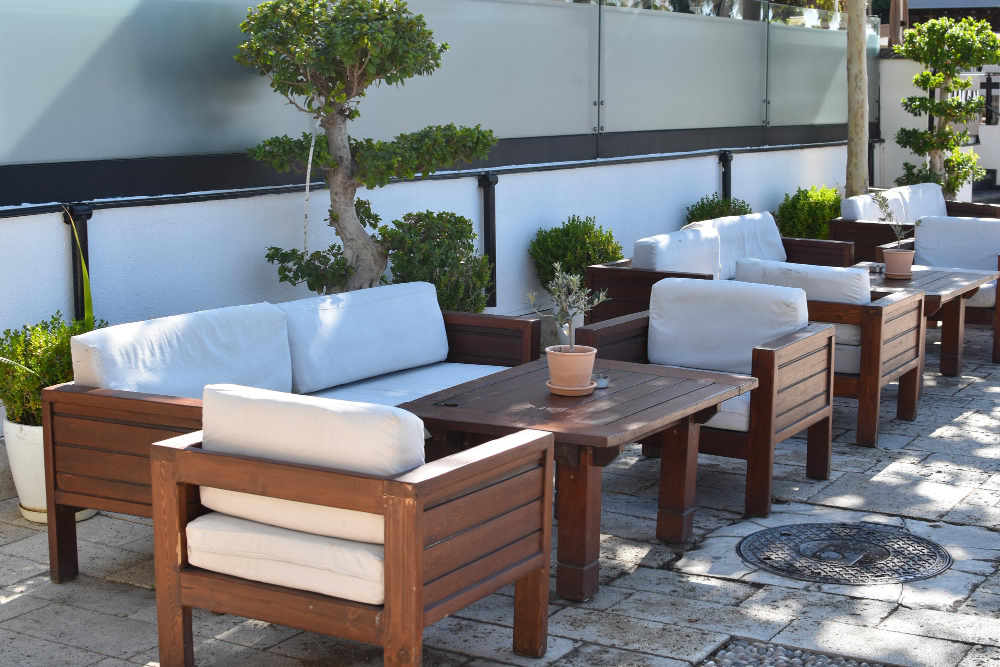
Orlando businesses face a unique challenge: creating outdoor spaces that look inviting year-round despite intense sun, high humidity, and afternoon downpours. Whether you're outfitting a cafe patio in Winter Park or a corporate break area in Lake Nona, the finish on your furniture determines how long your investment lasts.
The wrong choice often leads to fading, rusting, or peeling within months. Choosing the right materials and finishes upfront saves money on replacements and keeps your property looking professional. This guide breaks down exactly how to select finishes that stand up to Central Florida’s demanding climate.
If you need help setting up your space, professional office furniture installation ensures your investment is assembled correctly and placed for maximum durability.
What makes Orlando's climate so tough on furniture?
Orlando combines intense UV exposure with relentless moisture, accelerating wear and tear on almost every material.
Summer temperatures consistently hit 90-95°F, but the real enemy is the humidity, which hovers around 70-80% for much of the year. This moisture creates the perfect environment for rust and mold. Additionally, Florida receives over 50 inches of rain annually—more than Seattle—often in the form of sudden, heavy afternoon thunderstorms during the rainy season from June to September.
When you add Florida's high UV index to the mix, painted surfaces can chalk or fade rapidly. Understanding these factors is the first step in protecting your investment.
What factors matter most when choosing outdoor furniture?
You need finishes that specifically resist UV radiation and moisture intrusion.
Material Durability
The base material must be strong enough to support the finish. For example, aluminum doesn't rust like steel, making it a better candidate for wet environments even before a finish is applied.
UV Resistance
The sun acts like a slow-burning laser on furniture finishes. UV rays break down the chemical bonds in paints and plastics, leading to discoloration and brittleness. A finish with high UV resistance acts like permanent sunscreen for your tables and chairs.
Water Resistance
With daily summer rains, water resistance isn't optional. The finish must seal the underlying material completely. If moisture penetrates a microscopic crack in a coating, it can cause the paint to bubble or the metal underneath to corrode from the inside out.
What are the best finishes for commercial furniture in Orlando Florida?
The three most common durable finishes for this region are powder coating, liquid coating, and specialized wood sealants.
Powder Coating
This is the gold standard for metal furniture in Florida. Powder coating involves applying a dry powder to metal and baking it until it fuses into a hard, protective shell. It is significantly more durable than traditional paint, resisting chipping, scratching, and fading. Because the process creates a uniform seal, it provides excellent protection against humidity-induced rust.
Liquid Coating
While less durable than powder coating, modern high-performance liquid coatings (like Kynar or specialized epoxies) offer strong protection. These are often used when a specific custom color is needed or for materials that can’t withstand the high heat of the powder coating process. However, in Orlando's humidity, liquid coatings may require more frequent touch-ups over time.
Wood Finishing
Wood provides a classic look but requires the most maintenance. Teak and Ipe are popular choices because their natural oils resist water. However, even these hardwoods need a UV-blocking sealant or oil applied regularly to prevent them from turning gray or cracking under the Florida sun.
How do these finish options compare?
Powder coating usually wins on longevity, while wood offers unmatched aesthetics at a higher maintenance cost.
Powder Coating
- Pros: Extreme durability, eco-friendly (no VOCs), excellent rust resistance.
- Cons: difficult to touch up if deeply scratched; limited to metal furniture.
Liquid Coating
- Pros: endless color options, easier to apply on site for repairs.
- Cons: generally has a shorter lifespan than powder coating; can fade faster in high UV areas.
Wood Sealants
- Pros: preserves the natural beauty of wood; warm and inviting look.
- Cons: requires re-application every 6–12 months in Florida; labor-intensive.
Is investing in better finishes worth the cost?
Spending more upfront on high-quality finishes typically saves businesses 30-50% in replacement costs over five years.
Cheap residential-grade furniture might cost $100 per chair, but in a commercial setting exposed to Orlando weather, it often fails within a season. High-quality commercial furniture in Orlando Florida with a marine-grade powder coat might cost $250 per chair but can last 5–7 years or longer.
Consider a restaurant patio with 40 chairs. Buying cheap chairs ($4,000 total) that need replacing every year costs you $20,000 over five years. Investing in quality chairs ($10,000 total) that last five years saves you $10,000 in the long run—not to mention the labor and hassle of disposing of broken furniture.
According to industry estimates, commercial-grade outdoor furniture can range significantly in price, but durability is key. A high-quality teak chair typically costs between $370 and $1,140, depending on the grade and construction, but its resistance to rot makes it a sound investment for humid climates.
How do I maintain outdoor commercial furniture?
Regular cleaning is the secret to extending the life of any finish.
- Wash Regularly: Once a month, wash frames with mild soap and water to remove salt, dirt, and pollutants. This prevents grime from eating away at the finish.
- Check for Damage: Inspect for scratches or chips, especially on metal. Touch up chips immediately to prevent rust from spreading.
- Cover or Store: If possible, stack and cover furniture during extreme weather events like hurricanes or during the off-peak season to reduce exposure.
Are there local success stories?
Yes, many local businesses have learned that quality pays off.
One cafe in Baldwin Park switched from painted steel tables (which rusted within months) to powder-coated aluminum. Three years later, their patio still looks brand new despite constant exposure to sprinklers and rain.
Another hotel near the convention center utilizes heavy-duty resin wicker with aluminum frames. By choosing materials designed for 24/7 exposure, they maintain a luxury appearance for guests without constant maintenance.
Making the Right Choice for Your Business in Orlando
Selecting the right commercial furniture in Orlando Florida isn't just about style; it's about survival. By prioritizing durable materials like powder-coated aluminum or treated hardwoods, you ensure your outdoor spaces remain welcoming for clients and customers year-round.
Don't let the Florida sun burn a hole in your budget. Choose finishes that are built to last.